 INR ₹
INR ₹
 USD $
USD $ EUR €
EUR € GBP £
GBP £


Everything worth knowing before the needle, and after it.
In India the nose pin is tradition, fashion and personal signature at once. Most people are pierced without being told any of what follows.
A nose piercing is a small procedure that lasts the rest of your life, and it is usually arranged in an afternoon on somebody else’s recommendation.
Most of the questions people actually have go unasked.
- What is the difference between the piercing and the pin?
- Can I wear one if I am not married? Can a man?
- Which side, and does the reason matter?
- What happens on the day, and what should be settled before it?
This guide answers them in order, and points to the specialist guides wherever a subject needs more room than a beginner’s guide can give it.
This Is Part of the Totapari Nose Pin Knowledge Series
Wearing a nose pin well involves several separate questions — what the piercing means, how to get it done safely, how to heal it, what jewellery to put in it, and how it sits alongside everything else on your face. No single article can cover all of them properly, so each guide in this series takes one and goes into it in depth. This one is the beginner’s guide to the whole subject.
Published so far:
- Not From India? The Surprising Origin and Real Meaning of Your Nose Pin
- Nose Pins & Nose Piercing 101: Your Complete Guide to Getting Pierced in India (You are here)
- The Safest Way to Get a Nose Piercing in India: Needle vs. Gun, Cost & Healing
- The Ultimate Nose Piercing Troubleshooting Guide
- Nose Pin Style Guide for India: Types, Occasions and Trends
- How to Choose a Nose Pin for Your Nose Shape and Face Shape
- Nose Pin Size Guide: Gauge, Post Length and Hoop Diameter
- Indian Jewellery Names: Nath, Nathni, Laung, Phulli
- How to Care for Your Nose Pin: Gold, Silver, Plating, Kundan, Enamel and Stones (to be published soon)
Piercing or Pin? They Are Not the Same Thing
People use the two words as though they meant one thing, and the confusion causes real trouble when it comes to buying.
A nose piercing is the hole. It is made once, with a sterile needle, and it becomes a lasting channel through the nostril — lasting, but not indestructible: left empty it can begin to close, sometimes quickly.
A nose pin is the jewellery that goes into that hole. You will own many over a lifetime, and once the piercing has healed you can change them whenever you like — with the one caution that the piercing should never be left empty while you do.
The distinction matters because the piercing decides what jewellery will fit. Its thickness, its position and the thickness of your own nostril are fixed facts, and every pin you ever buy has to work with them.
The piercing lasts. The jewellery changes. Decide the first carefully, and the second stays easy for the rest of your life.
The Types of Nose Piercing
Almost every nose piercing in India is a nostril piercing — a single hole through the side of the nostril. Everything else is a variation on where the hole sits.


A high nostril piercing sits further up the side of the nose, above the usual crease. It looks quite different and it heals more slowly, because there is more cartilage and less soft tissue at that height.
A septum piercing passes through the wall between the nostrils — through the thin strip of soft tissue in front of the cartilage, not the cartilage itself. It is a different procedure with its own healing and its own jewellery.

Double nostril piercings place two holes on one side, or one on each. They are best done one at a time, since two fresh piercings on the same nostril heal harder than one.
The rest of this guide describes the nostril piercing, which is what almost everyone means by a nose piercing.
The Types of Nose Pin
Nose jewellery is usually sold by its fastening, and the fastening is not the same thing as how it looks. It is worth knowing both.
A flat-back stud, or labret, has a straight post with a decorative top and a separate back that screws or pushes on. Piercing studios treat it as the most comfortable to heal in, though it is not what most Indian jewellers stock.
A nose screw has a curved post that holds itself inside the nostril without a back. There is nothing to lose, and it takes practice to put in.
An L-shaped pin is bent at a right angle. It is the easiest to insert and the easiest to dislodge, which makes it good for beginners and poor for sleeping.
A hoop or ring passes through the piercing and curves around the outside of the nostril, so its diameter has to suit where your piercing sits.
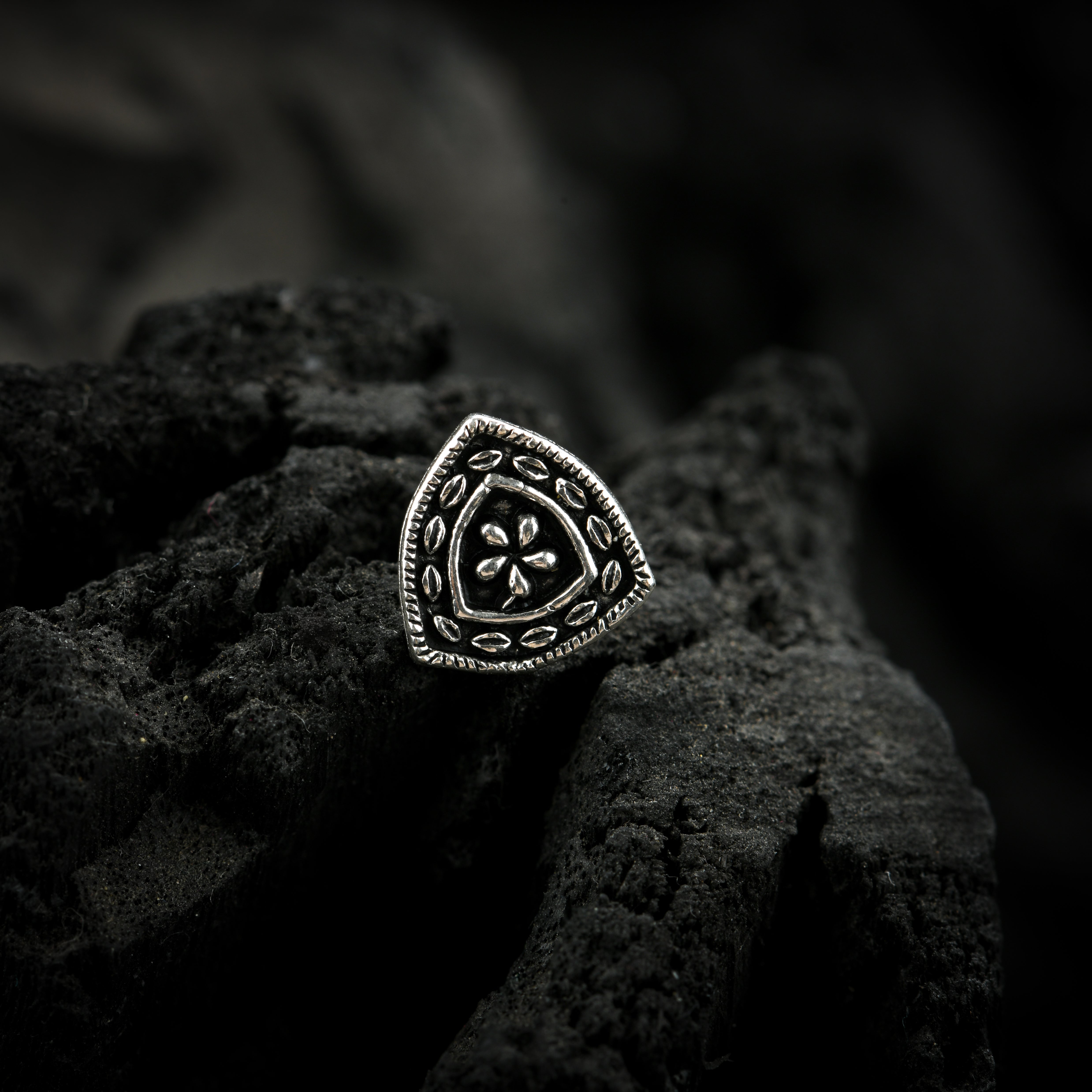
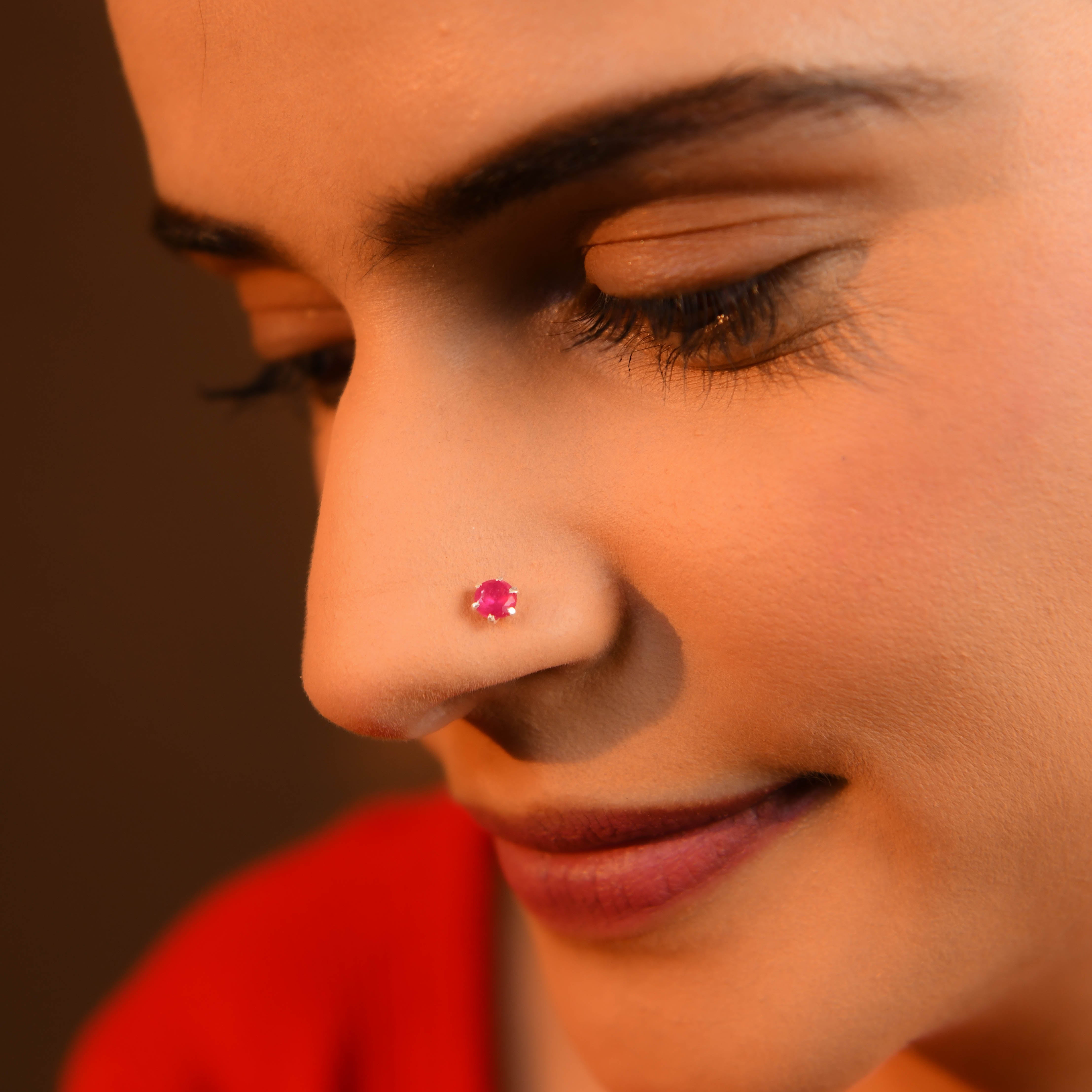
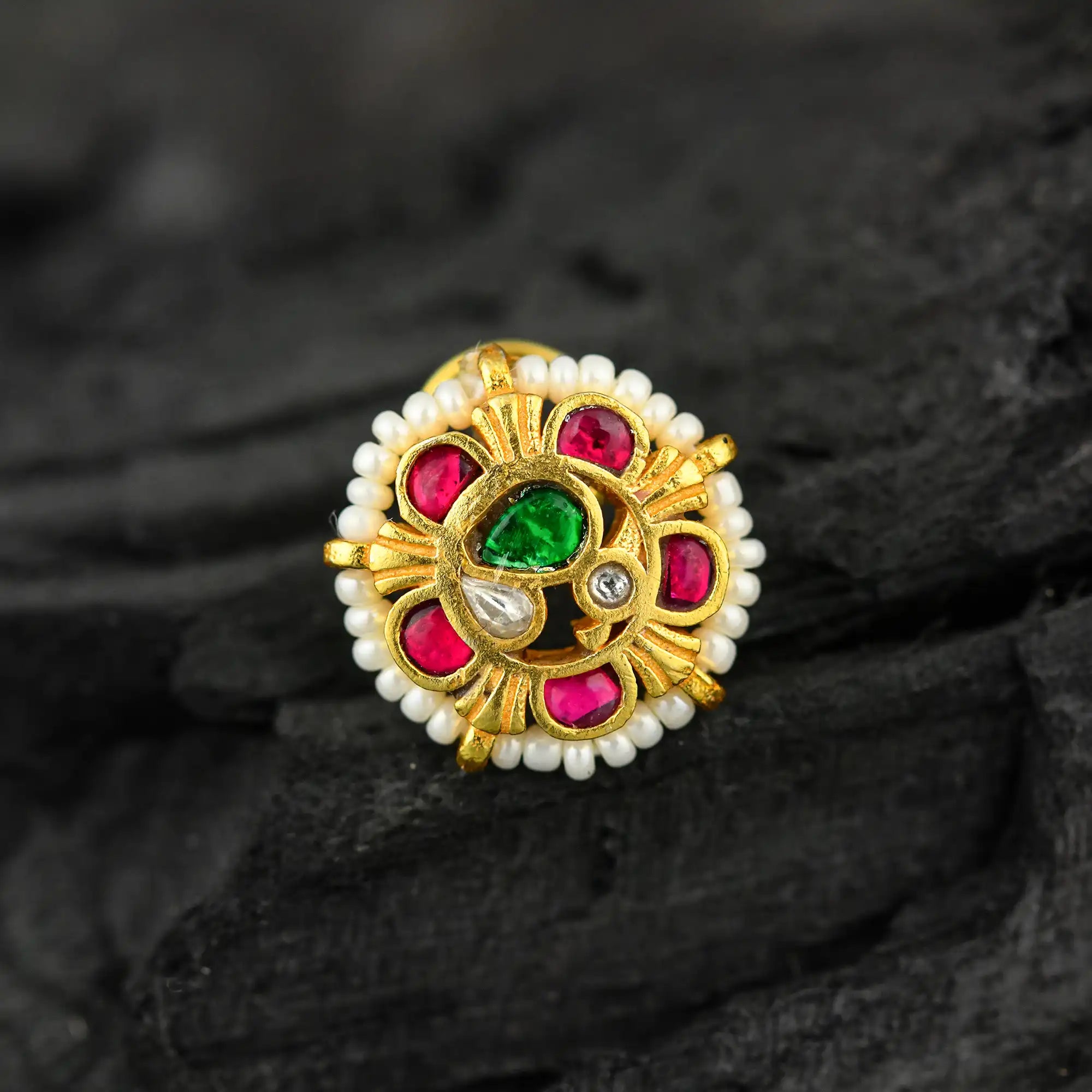
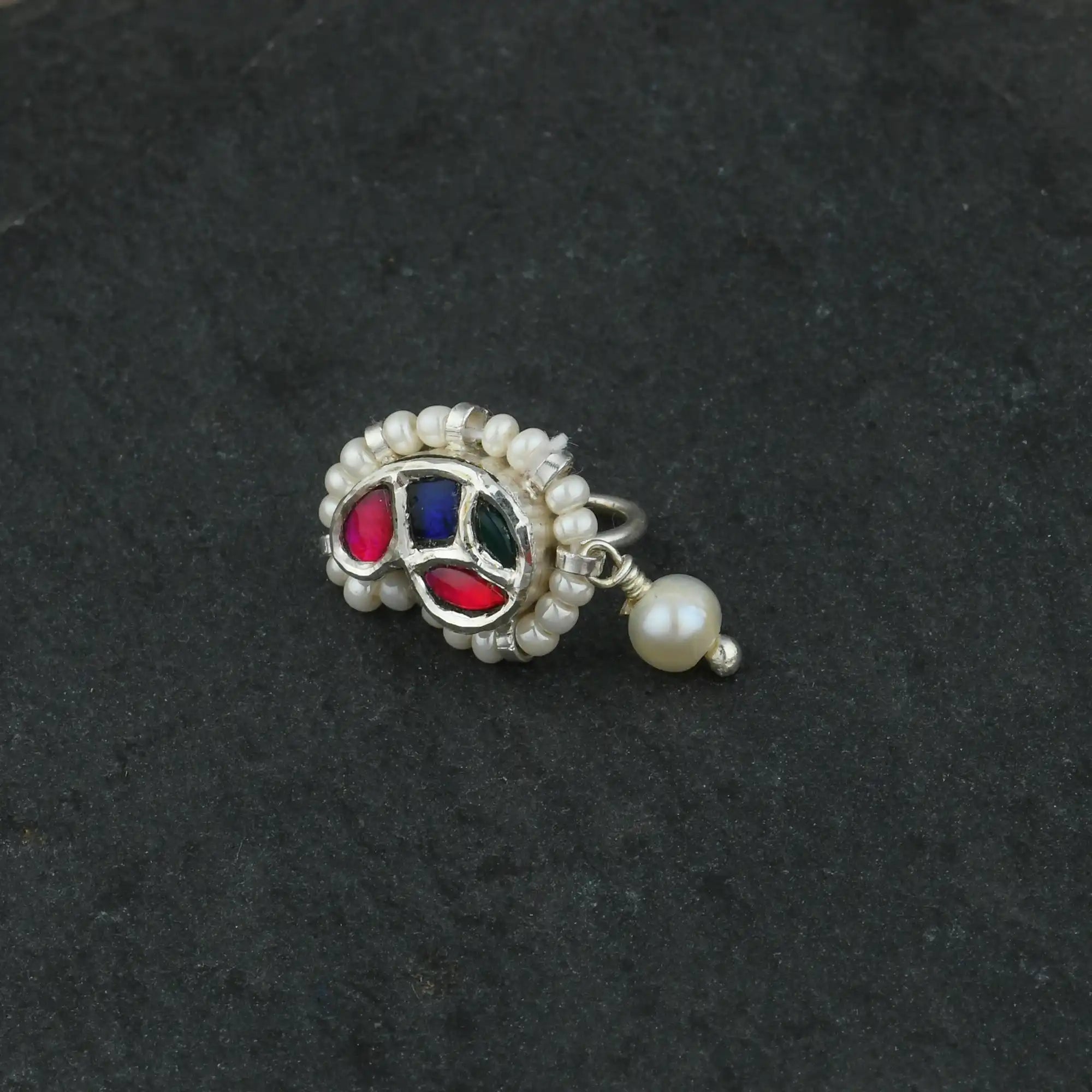
A clip-on needs no piercing at all. It grips the nostril, and it is the honest answer for anyone who wants the look without the commitment — or who wants to see the look on her own face before making a hole.
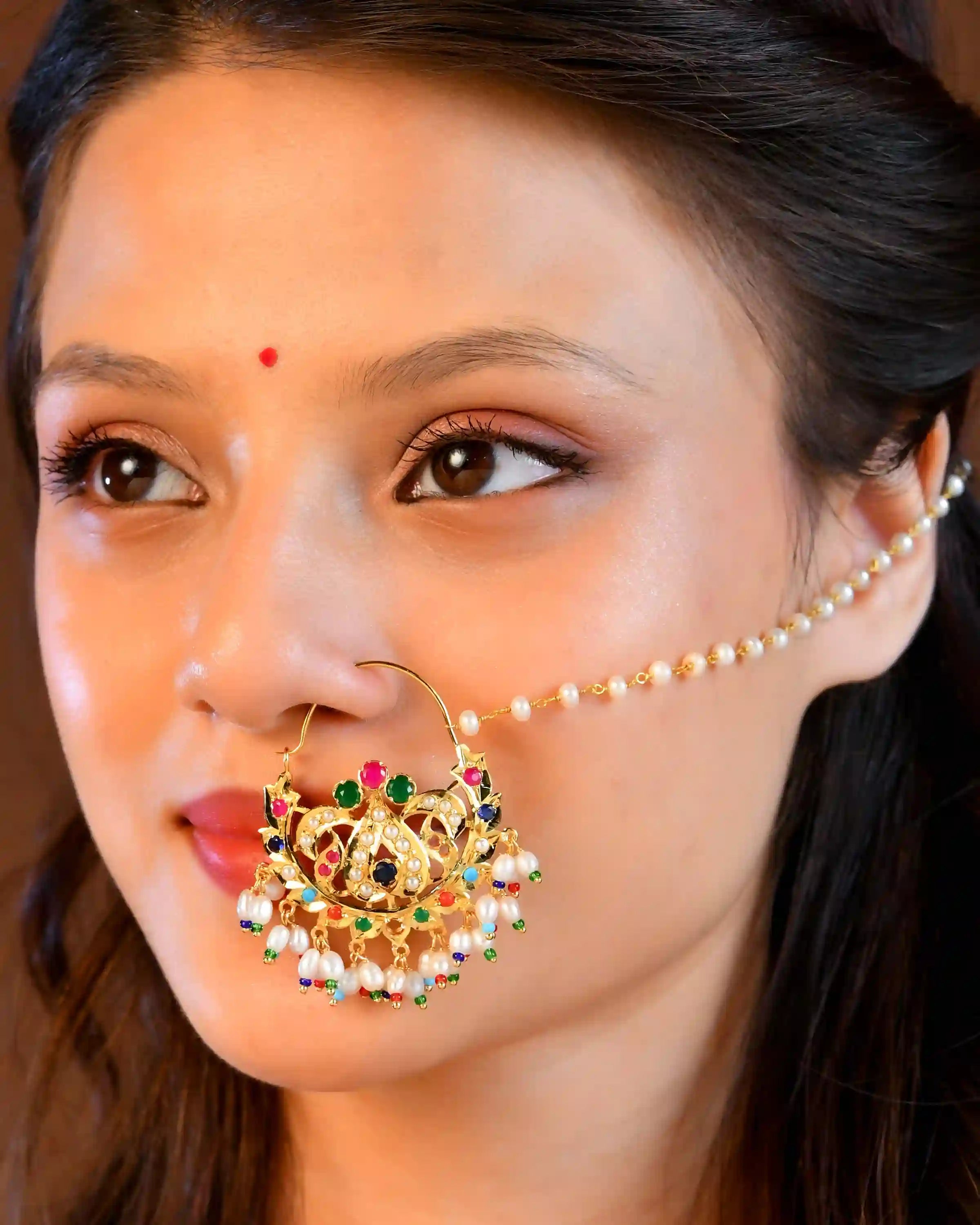
And the nath is the large bridal piece, often joined by a fine chain to the hair above the ear. It is usually a ring, though not always. It is worn on occasions rather than daily, and its scale is the whole point of it.
Fastening is not appearance. A screw and a stud can carry the same design, and a large stud can be far bolder than a fine hoop.
What It Should Be Made Of
There are two separate questions here, and they have different answers. What goes into a fresh piercing, and what you wear once it has healed.
For a Fresh Piercing
Implant-grade titanium is the safest choice, and it is the one to ask for by name. It is nickel-free, it resists corrosion, and it is specified to the same standards used for surgical implants — ASTM F136 for the alloy, ASTM F67 for commercially pure titanium. A piercer who stocks it will know those numbers.
Niobium is the other genuinely safe option. It behaves much like titanium, and it is less commonly stocked in India.
Solid gold works at 14 or 18 carat, provided it is nickel- and cadmium-free. Below 14 carat is not recommended for a healing piercing, and nor is 22 carat — it is the softest of the golds, and a post that has to sit in one place for six months is the wrong use for it.
Surgical steel is the usual answer in India, and it is the weakest of the four. The common grade, 316L, contains between ten and fourteen per cent nickel, and 316LVM rather more. The nickel is bound into the alloy and mostly stays there, but a healing piercing rests against that metal for months, and nickel is the metal people react to most often. It is not dangerous. It is simply second best, and there is no reason to accept second best on the one piece that stays in for half a year.
Ask what the metal is, and do not let “it’s surgical steel” end the conversation. Ask whether they have implant-grade titanium.
What Should Not Go Into a Fresh Piercing
Sterling silver. Beautiful in a healed piercing and wrong in a new one. It oxidises inside a wound and can leave a permanent grey mark in the skin.
Anything plated. The layer is thin, it wears through, and what is underneath then sits against healing tissue.
Unidentified alloys. If the listing does not say what the metal is, assume it contains nickel. Fashion jewellery alloys are the commonest cause of a reaction.
Acrylic and plastic. Porous, and they hold bacteria.
Once It Has Healed
A healed piercing is lined with your own skin, and the range opens up completely. Sterling silver, oxidised silver, gold-plated silver, kundan, enamel and stones are all fine for daily wear.
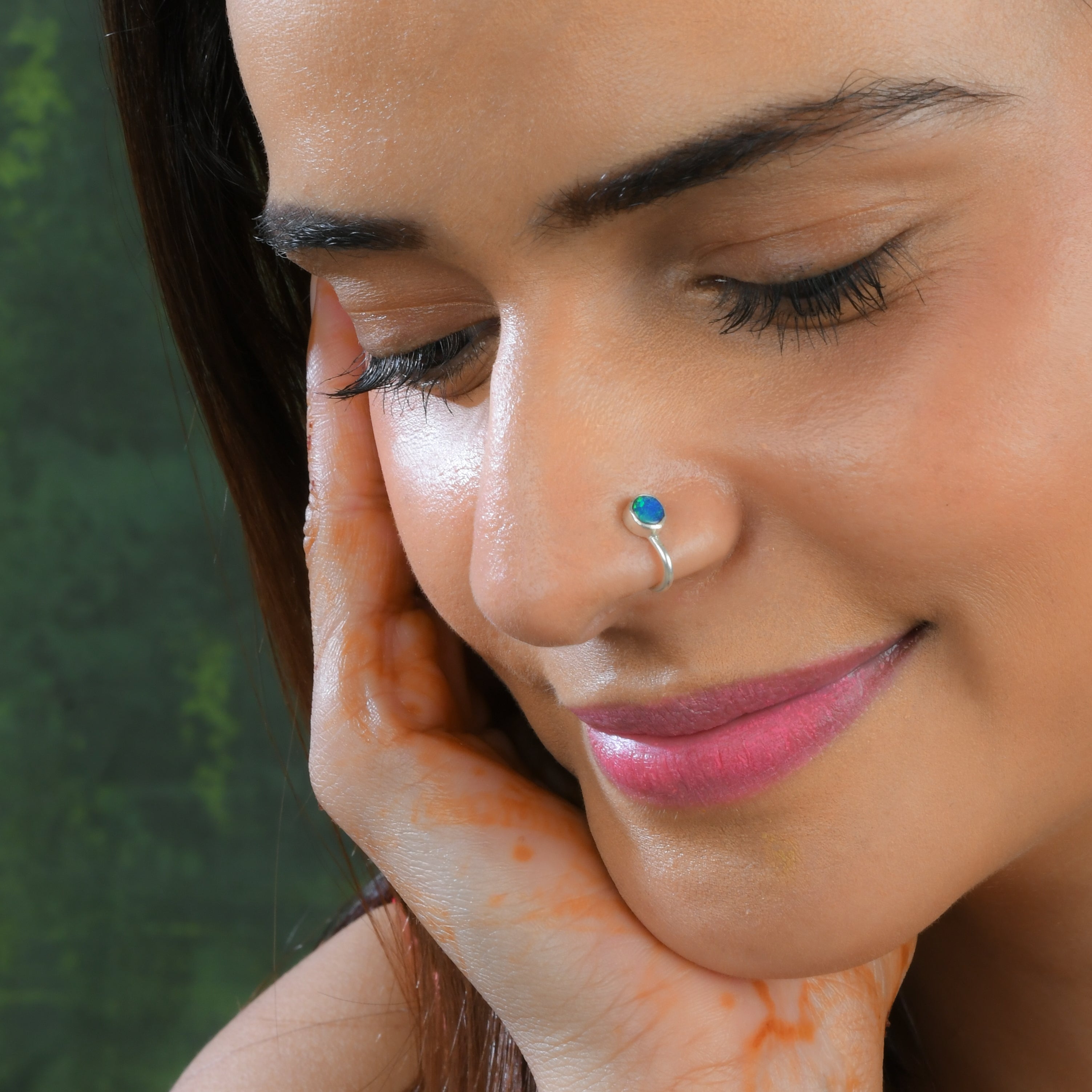
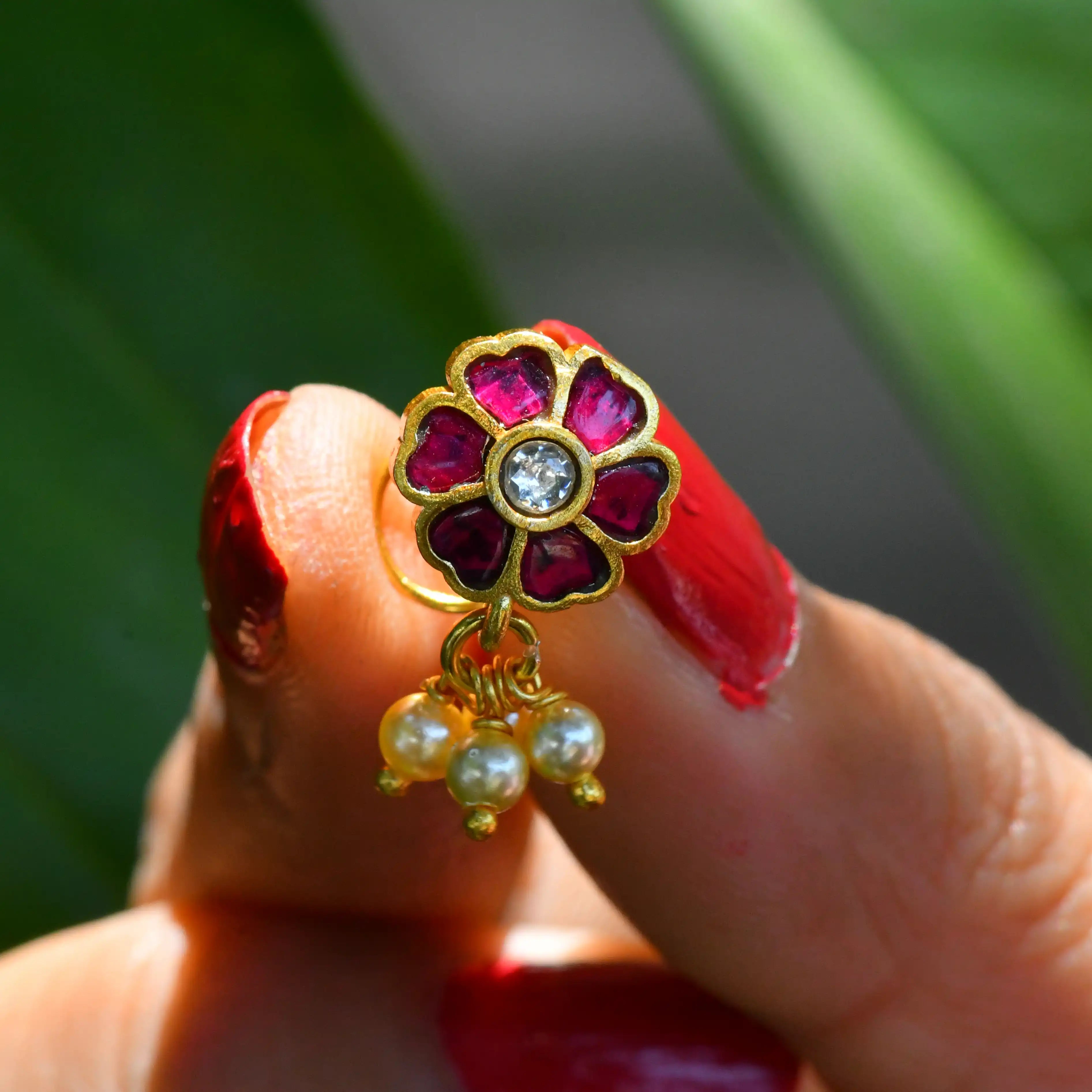
Two things to keep in mind. Plating is a surface, so it wears with time, and it wears fastest on the post where the piece is handled. And if your skin reacts to a particular nose pin after years of wearing others without trouble, suspect nickel in that alloy before you suspect the piercing.
What It Means, and Who Can Wear One
In India the nose pin has never been only decoration. It carries marriage, tradition and identity, and the bridal nath is tied to Goddess Parvati and to the standing of the married woman.
Ayurvedic thought connects the left nostril to the female reproductive organs through the Ida Nadi, and the piercing is traditionally held to ease menstrual discomfort. That association is why the left is the usual side through North and West India, while much of the South prefers the right — so the side is best understood as custom rather than prescription.
The ornament is also younger here than most people assume. Our guide to where the nose pin came from traces its arrival, and why India made it entirely its own.
Which brings us to the questions that are actually asked most often.
Can an unmarried woman wear one? Yes. The association with marriage is a meaning, not a rule. In many families girls are pierced as children, long before marriage is a consideration.
Can men wear one? Yes, and they have in parts of India for a very long time. It is less a new fashion than an old one returning.
Is there an age after which it is too late? No. A nostril piercing heals at any adult age. It may heal a little more slowly, and that is the only difference.
None of the tradition obliges you and none of it excludes you. Know what the ornament has meant, then decide for yourself.
What a Nose Pin Actually Does to a Face
It is often said that a nose pin transforms a face. That claims a great deal for a piece a few millimetres across.
What it genuinely does is simpler, and more interesting. It places a point of light at the centre of the face, where no other jewellery sits. Earrings frame the face and a necklace sits below it. Only a nose pin occupies the middle.
That is why the difference is visible even with a very small piece. The face gains a fixed point, and the rest of it arranges itself around that point.
What it will not do is reshape anything. Choosing the right size and form for your own nose is a real skill, and our guide to choosing a nose pin for your nose and face shape works through it properly.
What Happens When You Get It Done
The procedure is short, and much less frightening than the wait for it.
The piercer talks to you first, cleans the area, and marks the spot with a sterile pen for you to approve. You breathe in, and on the way out the needle passes through in one movement. The jewellery goes in immediately.
Most people rate the pain at three or four out of ten. A sharp pinch, watering eyes, and it is over before you have registered it.
Two things decide how well it goes, and neither is the pain. The first is whether a sterile single-use needle is used rather than a piercing gun. The second is what jewellery goes in, and how you care for it over the months that follow.
Both are covered in full in the safest way to get a nose piercing in India, along with what it should cost. If something has already gone wrong, our troubleshooting guide deals with bumps, redness and embedding.
Before You Go
Six things worth settling before you sit in the chair. Most of what goes wrong is decided here, not during the piercing.
Find a piercer who uses a needle. Not a gun, whatever the shop says about it being quicker. This is the single decision that matters most.
Ask what jewellery goes in. Implant-grade titanium is the safest first piece, with solid 14 or 18 carat gold as the alternative. Surgical steel is common and second best. Not silver, not plated, not plastic.
Count backwards from any wedding. A nostril piercing takes four to six months to heal, and the jewellery cannot be changed until it has. If you want a particular nath on the day, the piercing has to happen well before the season starts.
Decide the side beforehand. Left is the usual choice and carries the Ayurvedic reasoning; the right is preferred in parts of the South. If neither means anything to you, pick the side you prefer in the mirror.
Know that the first piece is temporary. It is fitted longer than you will finally need, because the nostril swells. It gets changed once healing is complete.
And take somebody with you. There is no clinical reason for it. It simply turns an anxious half hour into an afternoon out.
The piercing takes a minute. The healing takes months. Plan for the months.
Common Questions
What is the difference between a nose piercing and a nose pin?
The piercing is the hole; the pin is the jewellery you put in it. The piercing is made once and is permanent. You will own many pins over the years, and can change them whenever you like once the piercing has healed, provided the piercing is never left empty.
Can unmarried girls wear a nose pin?
Yes. The association with marriage is a cultural meaning, not a rule. In many families girls are pierced as children, long before marriage is a consideration.
Can men wear nose pins?
Yes. Men have worn nose jewellery in parts of India for a very long time. It became less common for a period and is now widely worn again.
Which side should be pierced, left or right?
The left is the usual choice through North and West India and carries the Ayurvedic association with the Ida Nadi and women's health. Much of the South prefers the right, so the side is custom rather than rule. If neither reason applies to you, choose the side you prefer in the mirror.
Does a nose piercing hurt?
Most people rate it three or four out of ten. It is a sharp pinch lasting about a second, and your eyes water by reflex. The anticipation is harder than the piercing itself.
How long before I can change my nose pin?
Four to six months, once the piercing is fully healed. It will feel healed much sooner, but the channel inside the nostril is still forming, and changing the jewellery early is the most common cause of bumps and infection.
Can I wear a nose pin without getting pierced?
Yes. A clip-on grips the nostril and needs no piercing. It is also a sensible way to see whether you like the look on your own face before committing to a hole.
Totapari Knowledge Series · Nose Pins: the beginner’s guide. Browse the Totapari nose pin collection.


